
Winter is approaching. As the energy settles and begins to move into “hibernation” mode, we can look forward to this time as one of rest, renewal, and a deepening focus on our practice. Fortunately, we have a lot of support for that.
The next Best Shape Possible Series, focused on chronic pain, began Wednesday, October 7. If you missed the first class and would like to join us, please register and get current by listening to a recording of the first class. Registration is a requirement simply so we can have your contact information in case we need to let you know about any changes regarding the class. We will not add you to our email list. Author Alan Gordon’s book The Way Out is required reading for the class.
If you would like additional support for any commitments that you wish to keep to assist you with chronic pain, there’s Top-Tier Nagging. For information about Top-Tier Nagging you can contact info@top-tiernagging.com.
A four-week email class beginning October 16 focuses on beliefs, assumptions and expectations that form the foundation of suffering. Beliefs have been a big part of what we’ve been delving into in the past few months. This is because beliefs are so deeply held that they’re more often a part of the unconscious than the conscious. Bringing them into conscious awareness is critical to ending suffering. In this class we’ll get to the very core of the issue of believing beliefs.
Now on the subject of expectations:
On the Yearlong Retreat call recently, we spoke about the role expectation plays in our lives and our suffering. Expectations, along with beliefs and assumptions, don’t just live in conditioned mind, they are conditioned mind. They’re the basis or content of the thoughts that we call conditioned mind. (Watch for a few minutes and you’ll see it clearly.)
Throughout my years of involvement with Awareness Practice, I’ve never encountered anyone who didn’t start their “search for meaning” from a place of disappointed expectation. It might show up as loss or failure or despair or depression or anxiety or fear or anger, but the genesis is the same. Life is not the way I want it to be. Life is not the way I thought it would be. And, I can’t make it, or me, be the way I want.
We each live in our own “reality.” Despite overwhelming evidence to the contrary, we continue to believe our reality is the Reality shared by all. We only have to pay attention for a matter of moments to realize a primary cause of our unhappiness is the near constant collision between what we’re experiencing and what’s actually happening. Misunderstandings and miscommunications. I thought the errand would take 20 minutes; it took an hour. I thought you said we were meeting tomorrow, not today. I sent that package and you never let me know you got it. You were going to get back to me about…. The payment didn’t go through…. I didn’t get a call back…. I got to the appointment and they had me down for next week…. My dog suddenly has a huge lump on her side…. I was rear-ended on the way to work…. I wasn’t feeling well and it turns out I have a terrifying diagnosis…. My partner is leaving me for someone else…. I’m getting laid off from my job…. I don’t have enough money for retirement…. My parents need more care than I can give them….
The list goes on and on, from small, we’re told, insignificant inconveniences to enormous life-altering, life-threatening, life-ending circumstances. Constantly we’re being hit with something new that is not the way it’s supposed to be.
We take it personally. I must be doing something wrong. I need to find a new self-improvement program to fix this. Become more efficient. Be more disciplined. Focus better. Learn to relax. Stop taking things so seriously.
All of which is simply an attempt to get a better set of beliefs, assumptions, and expectations into conditioned mind.
And so we turn the tables on egocentric karmic conditioning/self-hate. Instead of going with disappointment and dissatisfaction because an expectation is unmet, we use every unmet expectation as the opportunity to come to an awareness of Life as it is.
|
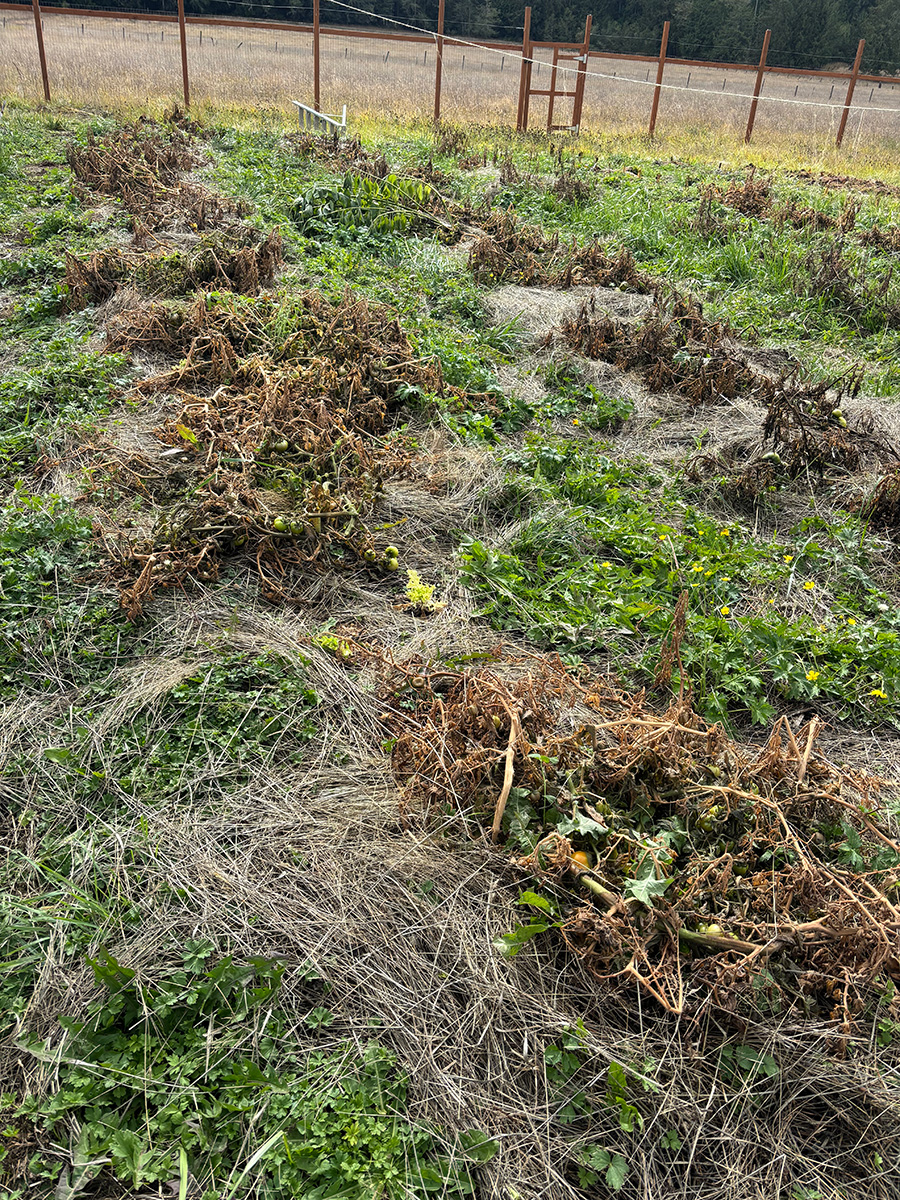
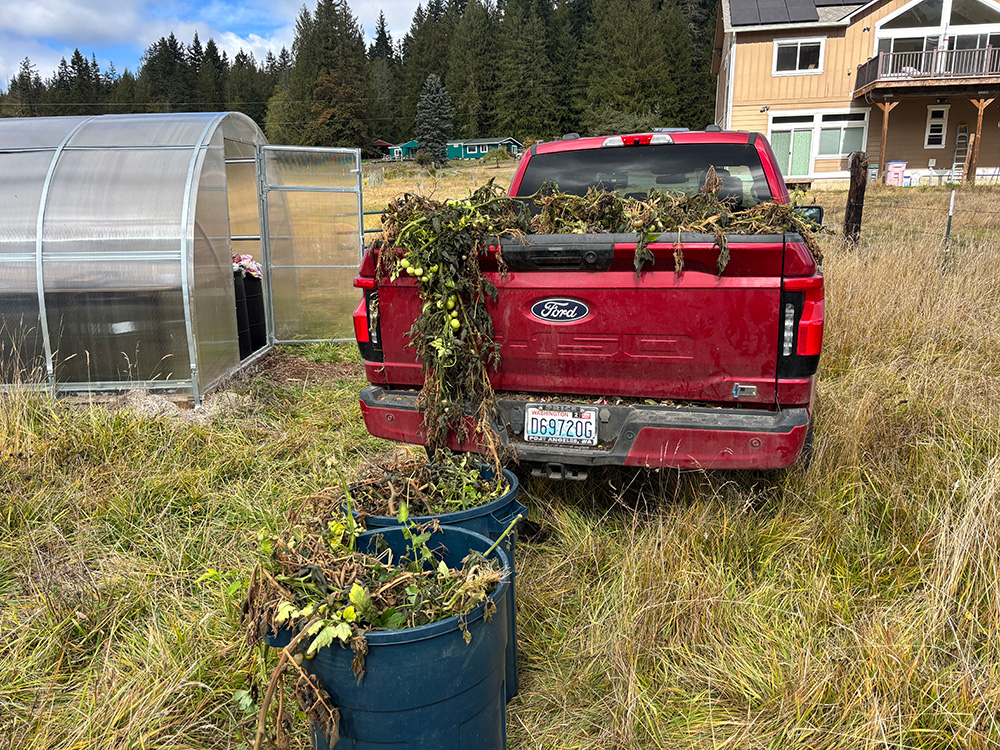
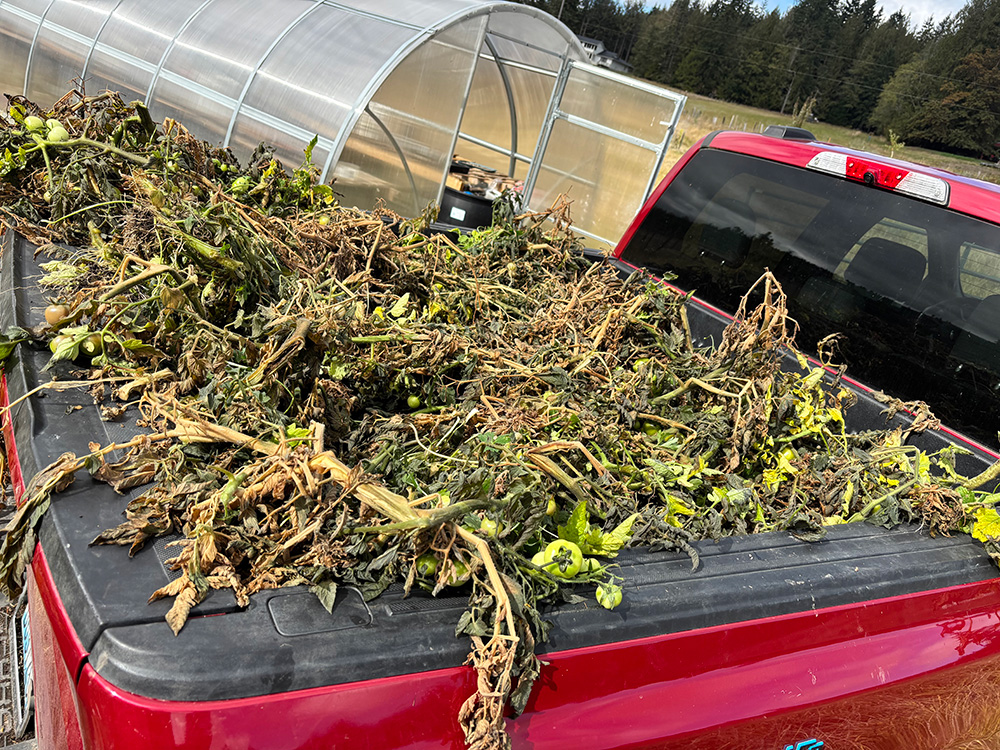
All of which brings me to a report on the Farm. Our last winter freeze—not frost—was on May 31. Our first autumn freeze was in the last week of September! Here are some pictures of what happened to our beautiful, on their way to ripening, tomatoes. You can see how unseen expectations such as “our growing season will be longer than three and a half months” could produce some disappointment. |
However, our farmer is philosophical. We’re learning to see what wants to grow here, and since our primary intention is to rehabilitate the land and create fancy dirt (compost), we can proceed undeterred. (With a few moments of silent appreciation for our beloved tomatoes as they make their way from vibrant plants to contributions to the compost pile.)
 |
 |
|
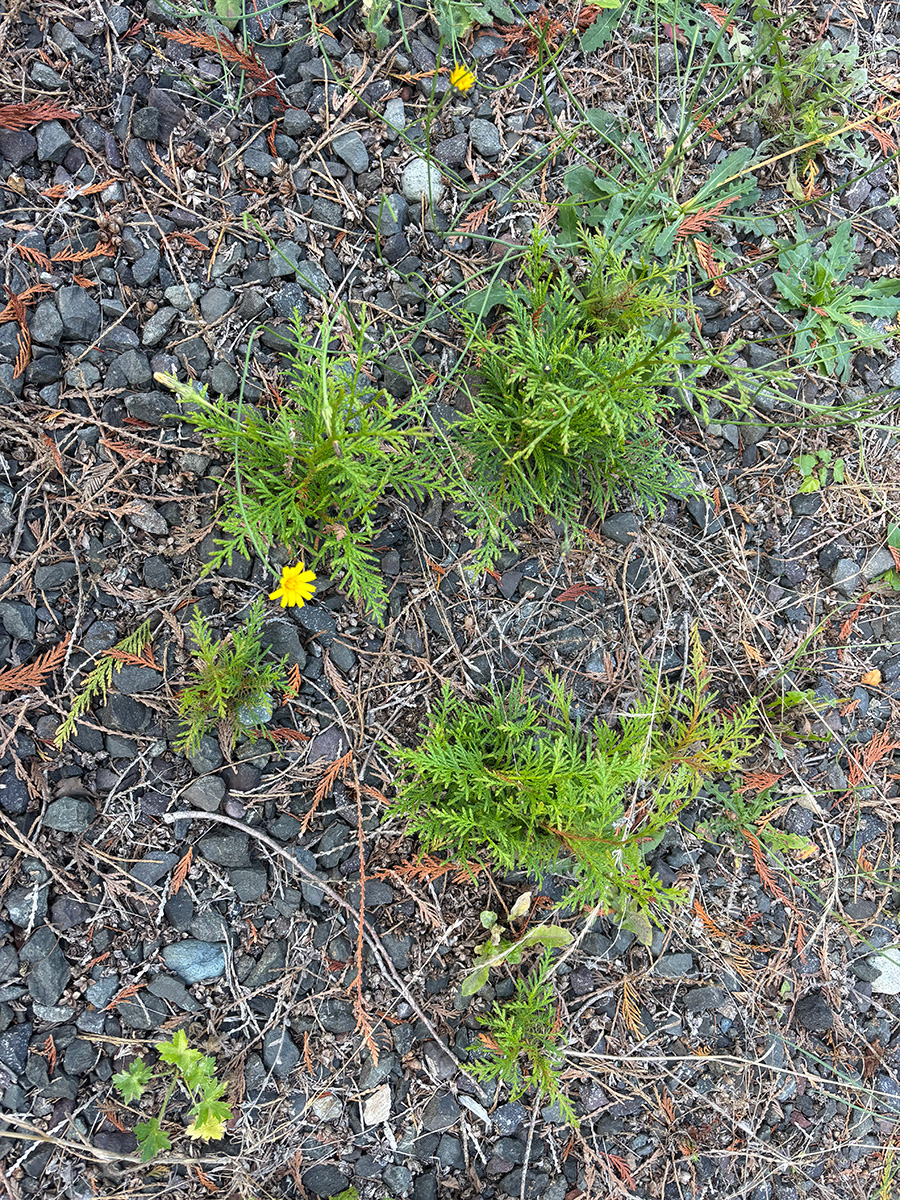
My current refrain is “Trees and Compost,” “Compost and Trees.” Those are our foci and anything else that wants to grow here is most welcome. We can collect tiny trees from places where they are unwanted, such as the open space between the bunker and the bathrooms at FAZC, and from the properties of other folk who don’t want to kill the little trees but don’t want them growing where they are currently growing, and bring them home where they can thrive.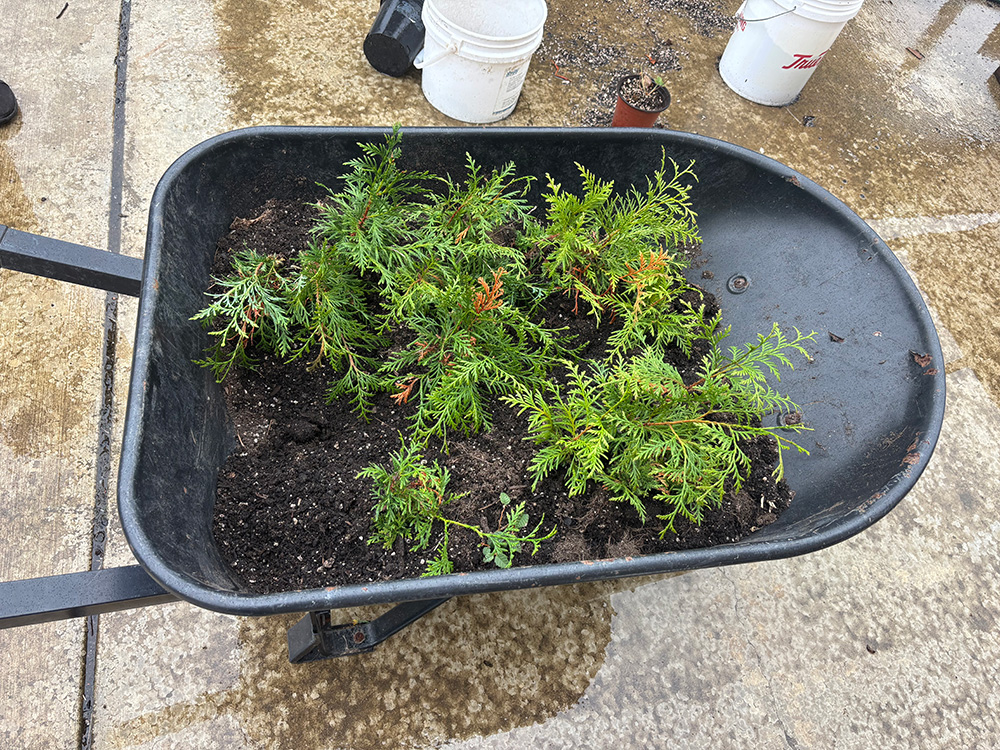 |
| We can continue to grow them from seeds we collect as well as from cuttings from our own trees and trees we find around the county. Here's the greenhouse fairly bursting at the seams with trees, either ready to plant this Fall or to winter in the greenhouse for a spring planting. | 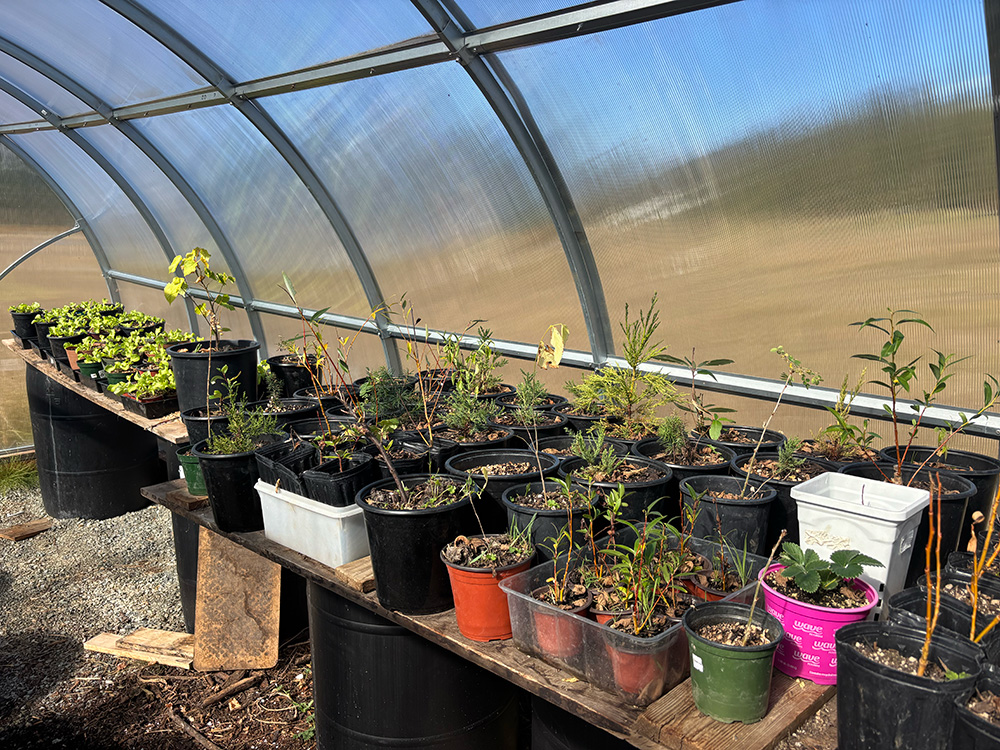 |
There are few things that put us in touch with our expectation like the loss of a loved one. As many of you know, last month we lost Sr. Phil D’Anna, a very bright light in this world, especially for our Sangha. One of my first thoughts when I learned of her passing was, “I never considered a world without Phil in it.” On Sunday, October 18 between 10-12 (Pacific), we will have a Zoom Memorial Service for Phil. If you didn’t receive the invitation to attend, please find that here.
We had a number of people ask about making a donation to Kantolomba in honor of Phil. In the course of making that possible I had the great pleasure of getting introduced to the e-cards that are a part of the fundraising campaign for Kantolomba. It’s true that I am not the most up-to-date on the world of technology so this might not be the case for others, but I could not believe how wonderful they are. Whether you would ever use one or not, do go take a look at them. Deep gasshō to Bob for this beautiful offering.
In gasshō,
ch